Much of the existing parking infrastructure in Canada has been quietly deteriorating. The features of this legacy system include cracked concrete, paper permits, coin machines and zero real time data. These are characteristics of parking systems that are not designed to meet today’s parking challenges. For those who own or manage properties, choosing not to do anything with their parking system is no longer cost-free; it will likely become even more costly.
Table of Contents
The Problem: Legacy Systems Are Breaking Down
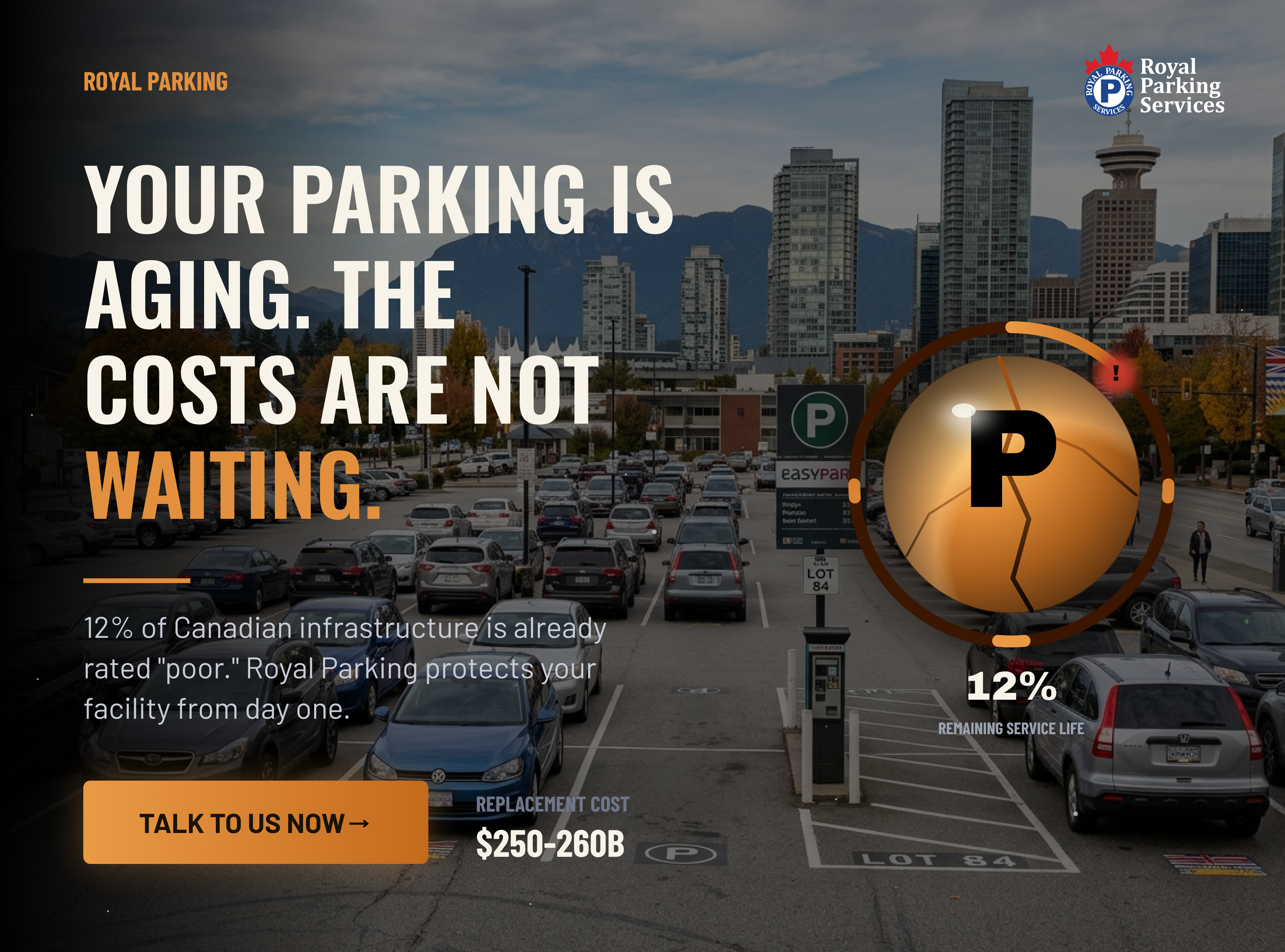
Approximately 12 percent of Canada’s municipalities’ (infrastructure) has approximately 250-260 billion dollars of required replacement. Parking infrastructures have deteriorated equally as well.
Many of today’s parking structures date back to the 1950s/60s. The systems used to manage these structures have not evolved to meet the needs of today’s residential complexes. Therefore, many older structures now face several challenges including:
Crumbling concrete – As concrete degrades it will crack. Eventually those cracks will compromise structural integrity. Concrete also corrodes from the inside out. When you patch one area another section may begin to fail and so on. This creates liability and potential injury to drivers/users of your facility.
Outdated access control systems – A great deal of the current parking structure access control systems use manual methods such as paper permits and coin operated equipment. These methods create unnecessary administrative overhead, create gaps in enforcing rules, and create frustration for residents and guests alike.
No real-time information on parking usage – If you cannot get up-to-date information about how your parking spaces are being utilized (i.e., occupied), you will likely find yourself constantly dealing with under-occupation and/or wasted capacity.
Increasing, unbudgeted costs for repairs – Owners of aging parking garage structures are finding themselves dealing with increasing, unbudgeted repair costs.
► If your parking facility is showing any of these signs, every month you wait makes it worse. Contact Royal Parking today for an assessment before costs spiral further. Go here.
The Cost of Doing Nothing
An unmanaged parking facility doesn’t retain its value, it depletes it. Each year an unmanaged property generates more problems (more calls for service), more illegal or un-permitted uses, and greater depreciation to both surface and ramp. Residents and/or prospective tenants have less confidence in properties that are un-structured for parking. A managed property attracts quality tenants, has fewer complaints, and retains a higher long term asset value than an un-managed one. This is a considerable distinction after only a few years of operation.
► Every month without a management system is a month of avoidable damage and cost. Contact Royal Parking today — the longer you wait, the more it will cost to fix. Tap here.
The Royal Parking Solution: Protecting the Facility from Day One
Royal Parking takes care of you from day one, regardless whether you’re planning to replace a parking garage, renovate one, or bring your current parking garage up to a contemporary level of management. Beyond just enforcing traffic in a parking garage at Royal Parking, our systems are specifically designed to ensure that you will have a viable facility as long as possible while also keeping down future operating expenses by the owner/property manager.
The above items list some of the key ways we can help:
Routine enforcement – of restricted zone areas protects structural integrity (prevents unauthorized use) and limits potential liability.
AppWay Park replaces paper permits and coin machines – all administrative overheads are eliminated when using digital vehicle registration.
Reduced Surface Damage – Clearly posted signs at all levels of the garage reduce driver confusion, this minimizes unnecessary vehicle movement within the garages ramps and surfaces.
Live Patrol Reports – Provide Property Owners with Real Time Data – This enables them to make educated decisions about budgeting for repairs/maintenance vs. waiting until they occur.
► Your parking facility is an asset. Start protecting it like one. Contact Royal Parking today and stop the damage before it becomes unmanageable. Go here.
A Managed Future for Your Parking Facility
If your parking system is aging then it’s no longer about if you should do something, but rather when. At Royal Parking we will evaluate your existing parking system and create an operational plan to protect your investment in the parking systems, lower operating expenses, and improve the overall experience of each and every one of your residents and visitors.
“The Instant High-Rise.” UBC Alumni Magazine, Spring 2026, magazine.alumni.ubc.ca/2026/spring-2026/science-technology/instant-high-rise.
“Living Blueprint.” UBC Alumni Magazine, Spring 2026, magazine.alumni.ubc.ca/2026/spring-2026/science-technology/living-blueprint.
“How Can Canada Fix Its Housing Crisis?” UBC Alumni Magazine, Spring 2026, magazine.alumni.ubc.ca/2026/spring-2026/humanities-life/how-can-canada-fix-its-housing-crisis.
Yang, Y. Infrastructure Canada Research. Cited in UBC Alumni Magazine, Spring 2026.
“Why the Built Environment.” Architecture 2030, architecture2030.org/why-the-built-environment. Source data: International Energy Agency, Global Building Sector CO2 Emissions and Floor Area on the Net Zero Scenario, 2020–2050.
“World Population Prospects.” United Nations Department of Economic and Social Affairs, population.un.org/wpp.


Leave a Reply